“Expository preaching means making God’s Word plain. In an expository sermon the preacher simply tries to explain what the Bible teaches. The main points of his sermon are the points made by a particular text in the Bible. The minister not only begins with Scripture, but also allows the Scripture to establish the context and content for his entire sermon. The way he decides what to say is by studying what the Bible has to say, so that the Scripture itself sets the agenda for his interpretation and application.
This kind of preaching is most helpfully done when a minister follows the logic of the Scriptures, systematically preaching chapter by chapter and verse by verse through entire books of the Bible. This helps ensure that a congregation hears what God wants them to hear, and not simply what their minister thinks they ought to hear.
But expository preaching is not so much a method as it is a mind-set. A minister who sees himself as an expositor knows that he is not the master of the Word, but its servant. He has no other ambition than to preach what the Scriptures actually teach. His aim is to be faithful to God’s word so that his people can hear God’s voice. He himself is only God’s mouthpiece, speaking God’s message into the ears of God’s people, and thus into their minds and hearts. To that end, he carefully works his way through the Scriptures, reading, explaining, and applying them to his congregation. On occasion he may find it necessary to address some pastoral concerns in a topical fashion, but even then his sermons come from his exposition of particular passages of Scripture. Rather than focusing on his own spiritual experience, or on current events, or on what he perceives as his congregation’s needs and interests, the minister gives his fullest attention to teaching what the Bible actually says.” Philip Graham Ryken ‘City on a Hill’ p.48-49
Saturday, September 12, 2009

Wednesday, September 9, 2009
The Difficulty with God-Centered Worship
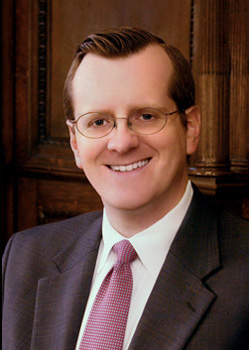 “There is one major difficulty with God-centered worship. God is dangerous, and thus is not altogether safe to come into His presence. Just ask Moses. Or Nadab and Abihu. Or Uzzah. Or Isaiah. Or Job. Or Ananias and Sapphira. All of these people had close encounters with the God of glory. In some cases they were utterly destroyed by the terror of His majesty. In other cases they were simply undone by the brightness of His glory. But in every case they discovered that it is not completely safe to worship a God who is glorious in His holiness. It is for this reason that we give praise to God in Jesus’ name. Our worship must be Christ-honoring. … God’s name is never simply a title, but it always represents the full majesty of His being and attributes. The name of Jesus refers specifically to His person and work as the Savior of sinners. It is the name of salvation. … It is only on the basis of Christ’s atoning work that anyone can ever approach God. Before we approach God in worship, we must be reconciled to Him through Christ and His cross.” – Philip Graham Ryken ‘City on a Hill’ p.68-70
Saturday, September 5, 2009
Counselling with Sincerity

"When you counsel and warn others, do it earnestly, affectionately, and thoroughly. And when you are speaking to your equals, let your warnings be intermixed with expressions of your own unworthiness and of the sovereign grace that makes you differ. And, if you can with a good conscience, say how you in yourself are more unworthy than they." Jonathon Edwards 'Advice to Young Converts'
Tuesday, September 1, 2009
Tozer... Truth has two Wings

"Lack of balance in the Christian life is often the direct consequence of overemphasis on certain favorite texts, with a corresponding underemphasis on other related ones. For it is not denial only that makes a truth void; failure to emphasize it will in the long run be equally damaging. And this puts us in the odd position of holding the truth theoretically while we make it of no effect by neglecting it in practice. Unused truth becomes as useless as an unused muscle. Sometimes our dogmatic insistence upon 'It is written' and our refusal to hear 'Again it is written' makes heretics of us, our heresy being the noncreedal variety which does not rouse the opposition of the theologians." A W Tozer 'That Incredible Christian'
Subscribe to:
Posts (Atom)


